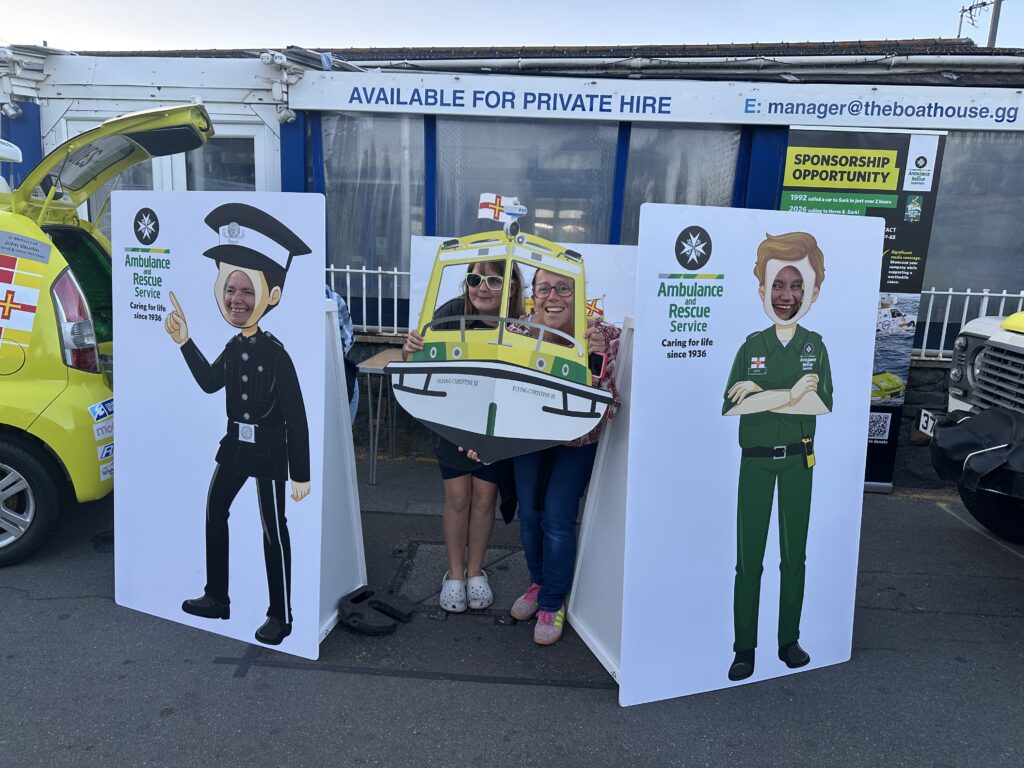
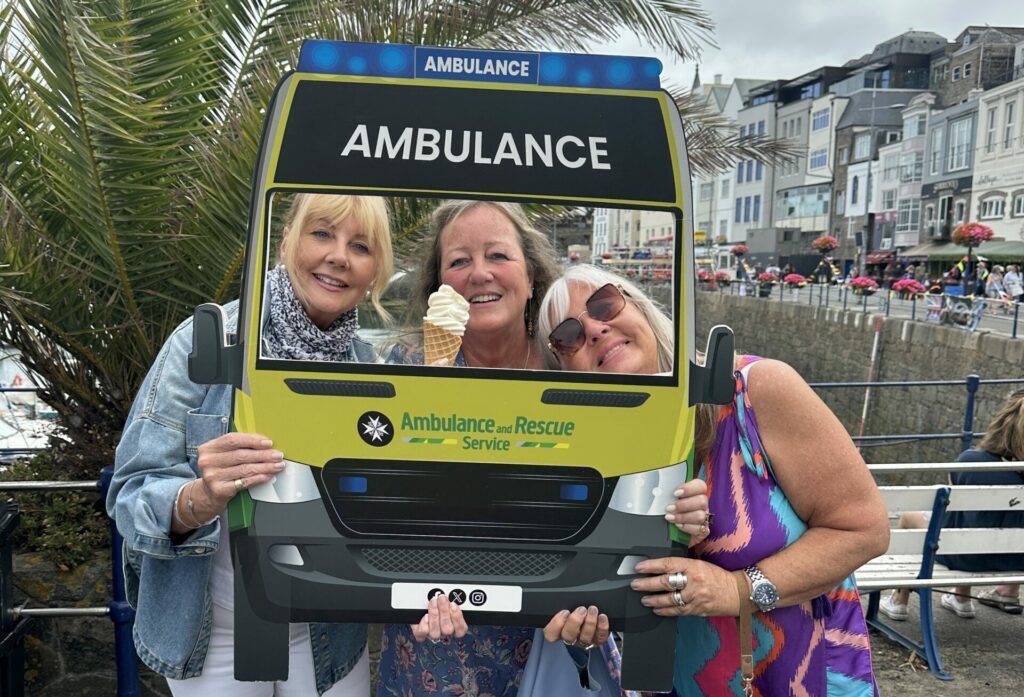
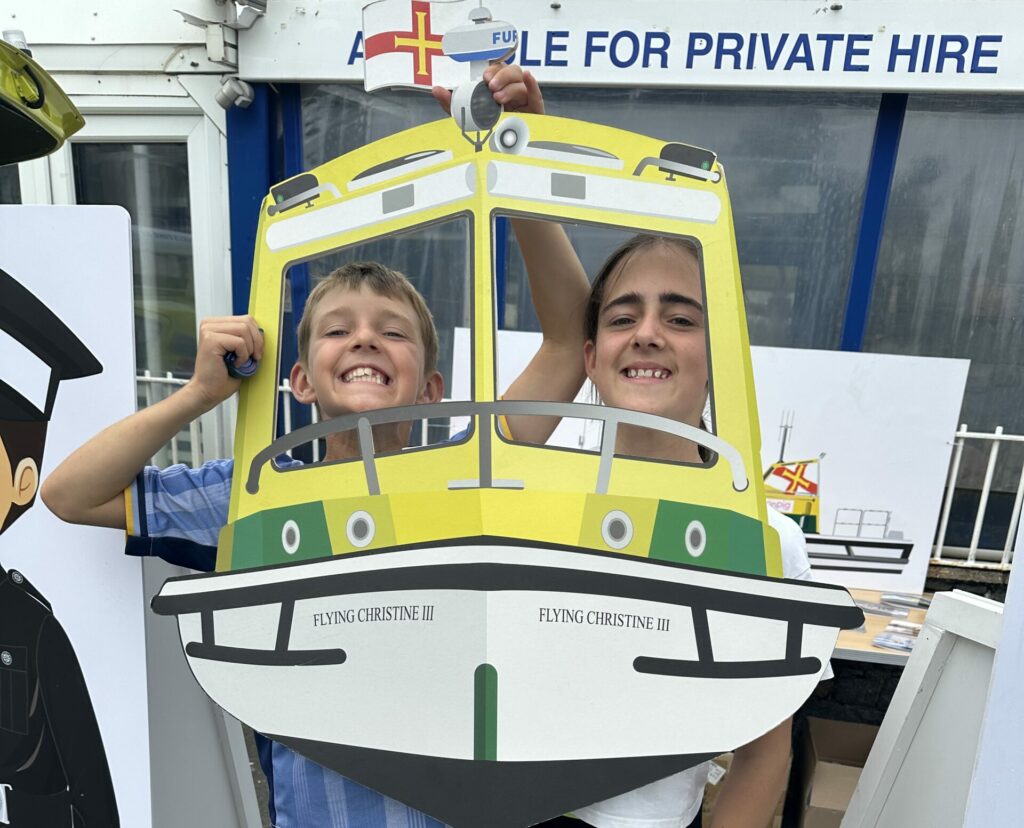
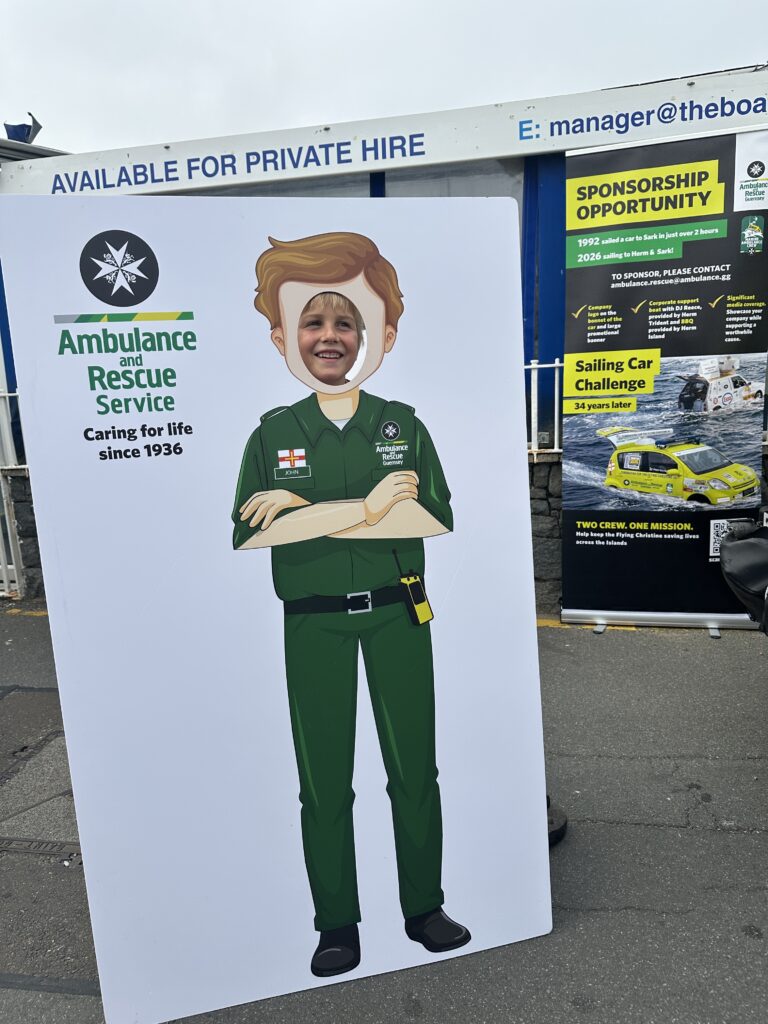
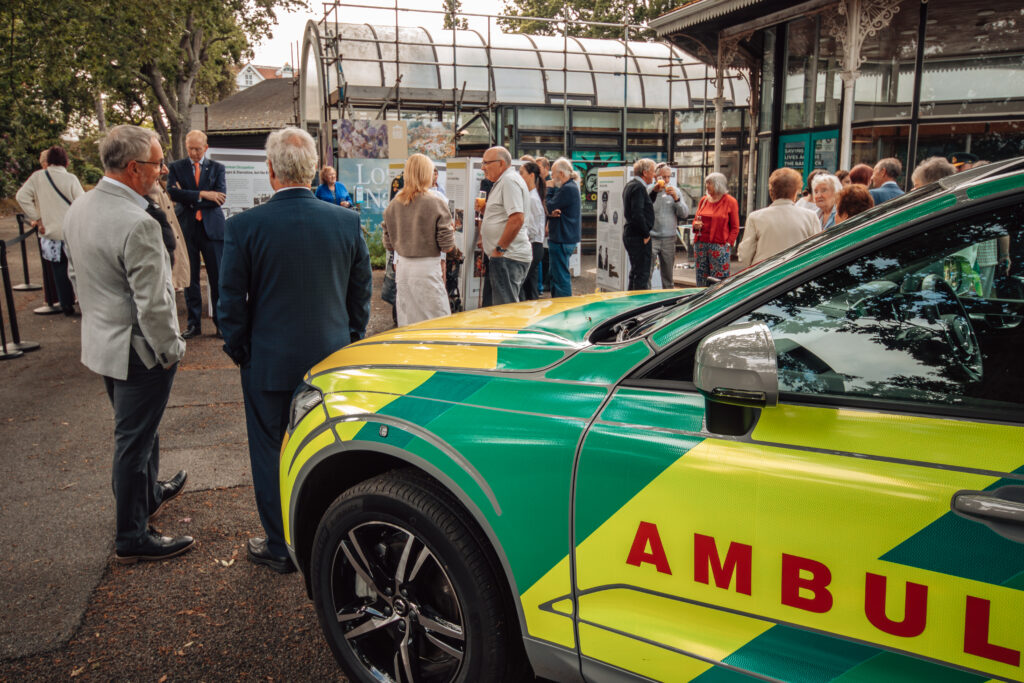
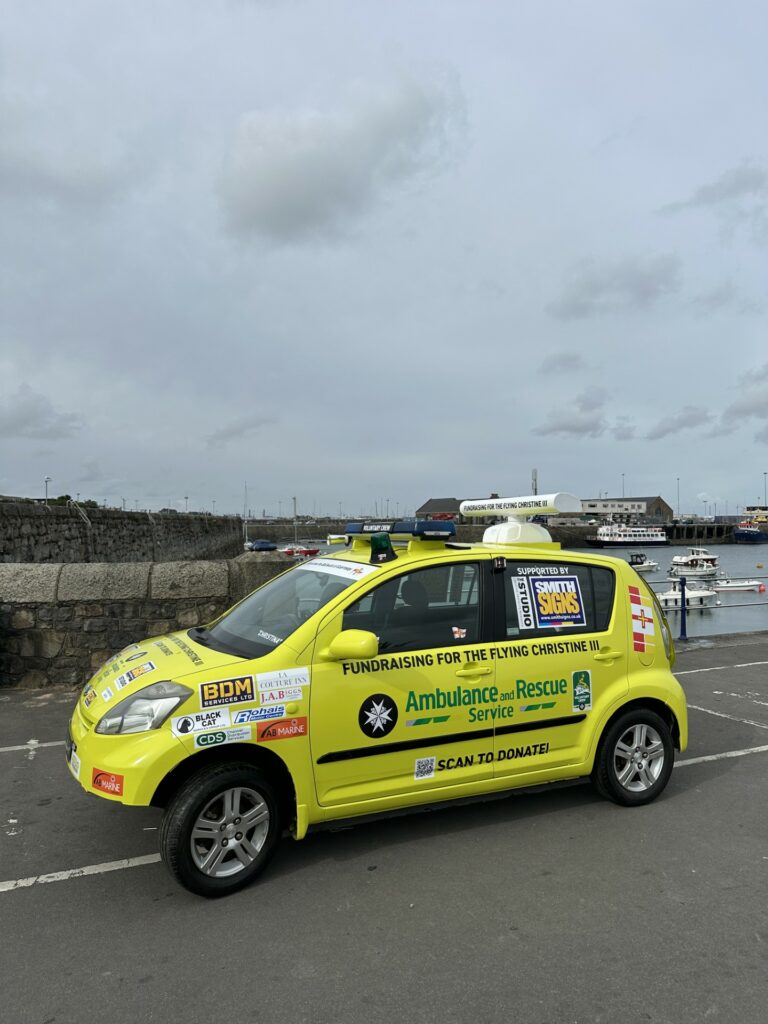
The Flying Christine floating car proved a big hit with the crowds at the Harbour Carnival.
Hundreds of people came along to say hello, see the floating car and support the Flying Christine III fundraising appeal. Our new head-in-the-hole photo boards also proved a huge hit.
The bright yellow car is making an appearance at lots of summer events before the volunteer crew members embark on their challenge to sail the car from St Peter Port to Herm and onto Sark later this year.
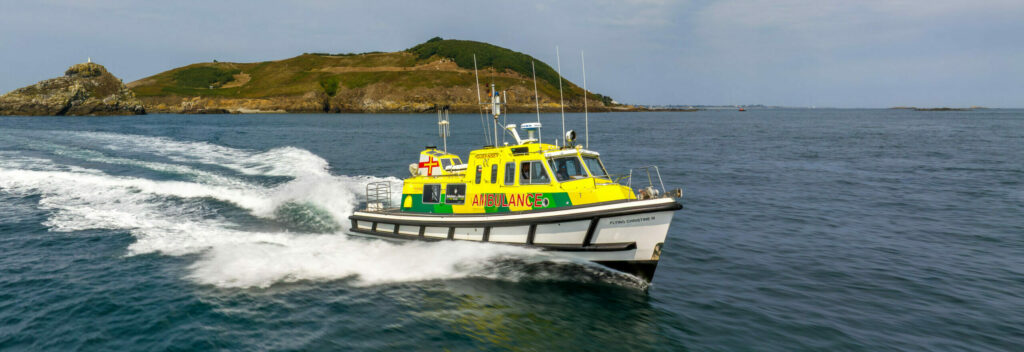
The Bailiwick’s marine ambulance has been deployed four times in three days, responding to emergency calls in Herm and Sark.
Flying Christine III was sent to Sark twice on Thursday for medical calls. The first case followed a 999 call and a subsequent request from the Sark doctor. The volunteer crew transported the paramedic-led medical team to Sark where they were met by the doctor and the island’s ambulance. The patient was given treatment and was conveyed back to Guernsey for further care. A second patient from an unrelated case was also taken to Guernsey at the request of the doctor.
Shortly before 10pm on Thursday night Flying Christine III was deployed for the second emergency case, with two patients arriving in St Peter Port just over an hour later. Both patients were taken by waiting road ambulance to the Princess Elizabeth Hospital, with on-going monitoring by the paramedic crew.
The marine ambulance was back in action on Friday evening, with an urgent call to Herm, following a request from the Herm Community First Responder. The patient was carried on to the Flying Christine and treated by the medical team on the return to St Peter Port.
The fourth case was just before 8o’clock on Saturday morning, with a call to Sark. The Guernsey based ambulance crew was transported to Sark on the Flying Christine and following a handover from the Sark GP the patient was conveyed to Guernsey and onward to the Emergency Department.
The Ambulance & Rescue service would like to thank the volunteer Flying Christine boat crew for responding to the four cases.
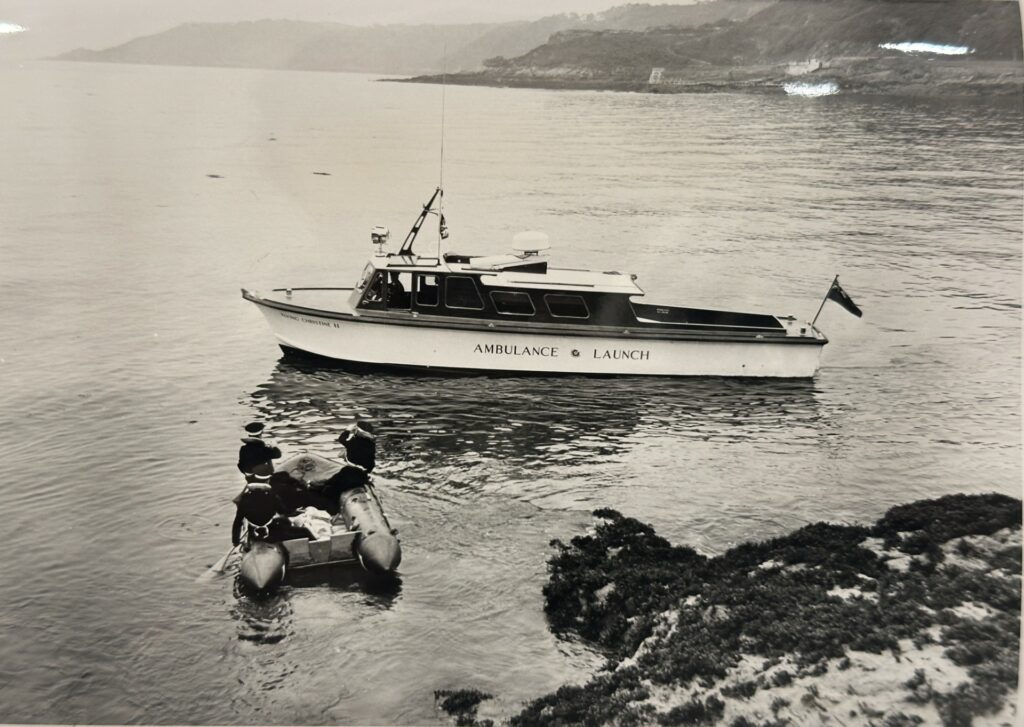
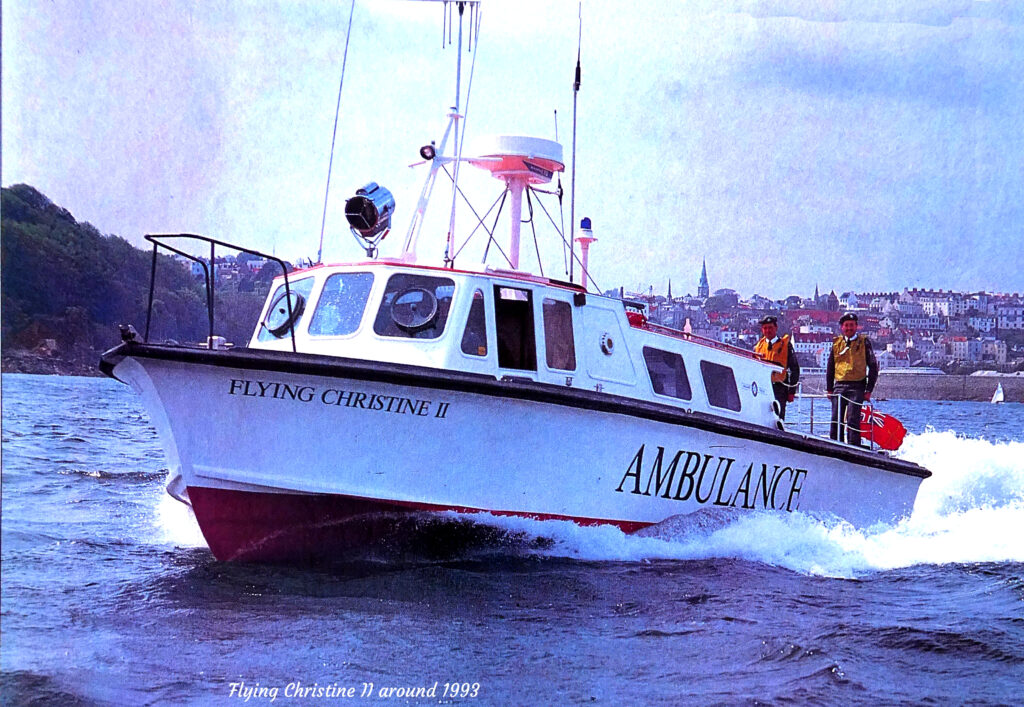
The Flying Christine III is a purpose-designed marine ambulance, which delivers a lifeline service to the islands of the Bailiwick. The boat is a charitable asset, provided by St John Ambulance & Rescue. The vessel was built with public support and continues to operate through a combination of subscriptions and charges alongside sponsorship, charitable donations and fundraising.
Guernsey Museum is hosting an exhibition of photos telling the story of St John Ambulance and Rescue Service from its humble beginings in 1936, through the pioneering years of the 50s and 60s, to the modern day paramedic-led ambulance service of today.
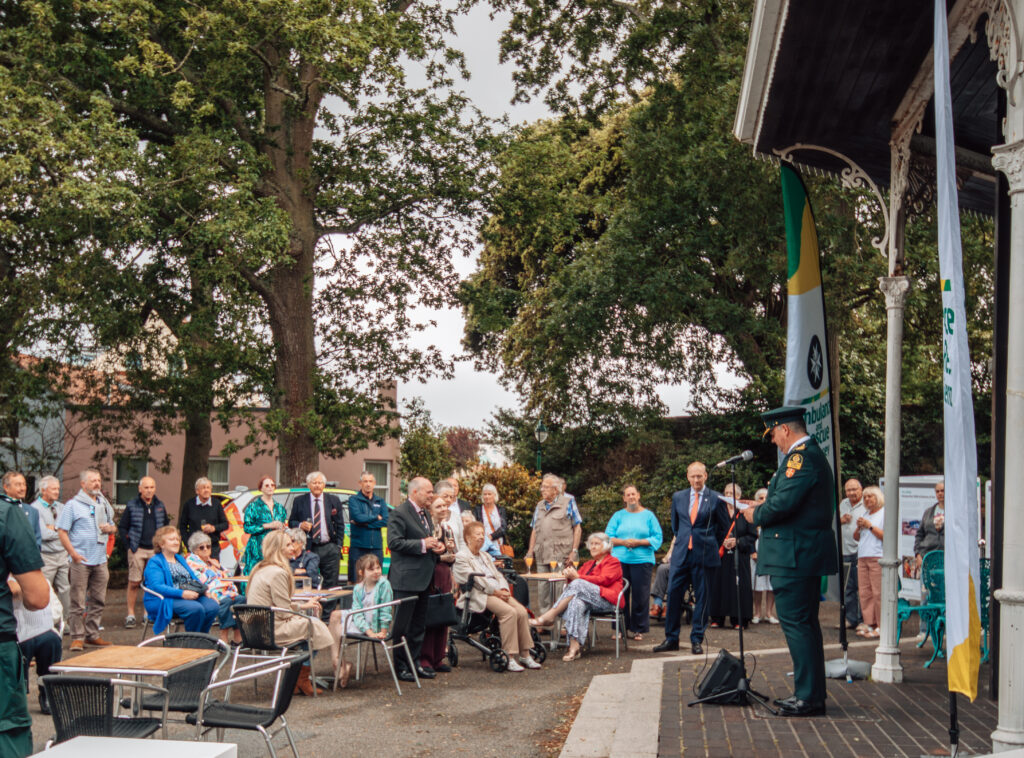
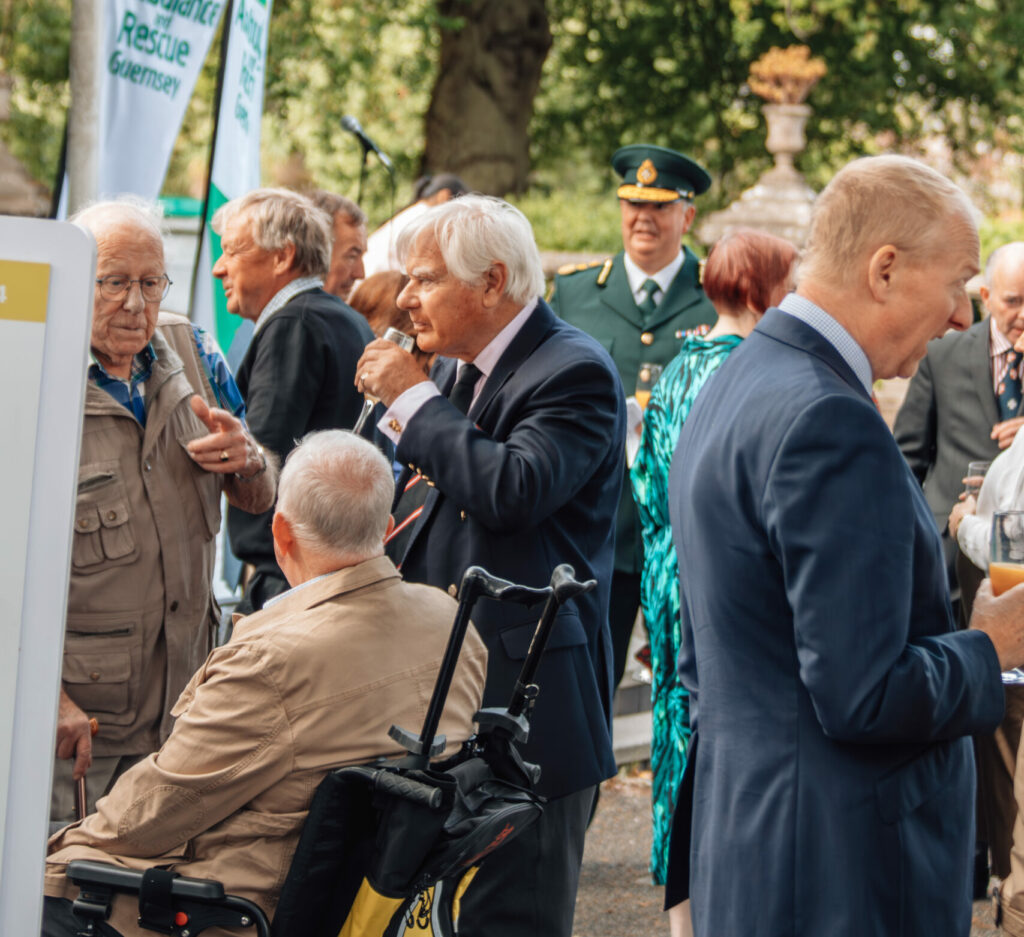
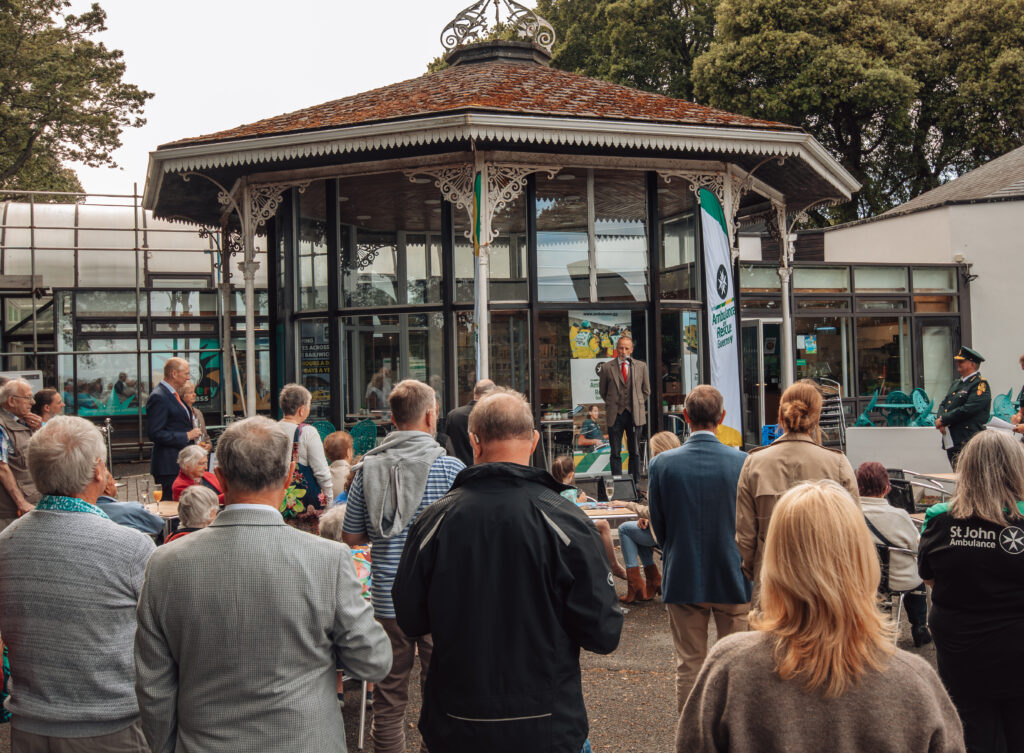
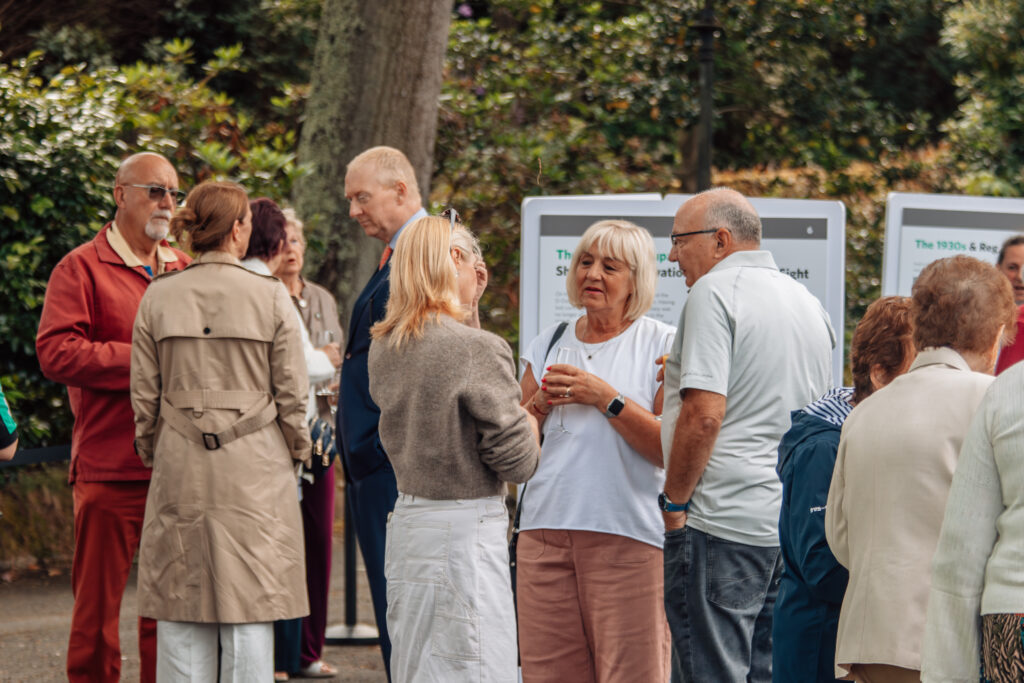
Former employees and supporters were among those who attended the opening of the exhibition, which took place on 2nd June, exactly 90 years after the first ambulance left the Rohais on the service’s first emergency call.
Chief Ambulance Officer, John Atkins said: “At around 5 pm, on Tuesday, 2nd June 1936, an ambulance from Guernsey’s fledgling St John Ambulance Brigade responded to a call for help – the first such call since St John had taken over the running of the island’s ambulance service from the States of Guernsey.
As we gather here this afternoon, ninety years and many thousands of emergency calls later, we look back with both fondness and admiration, at everything the St John Ambulance & Rescue Service, as it is known today, has achieved throughout that time.
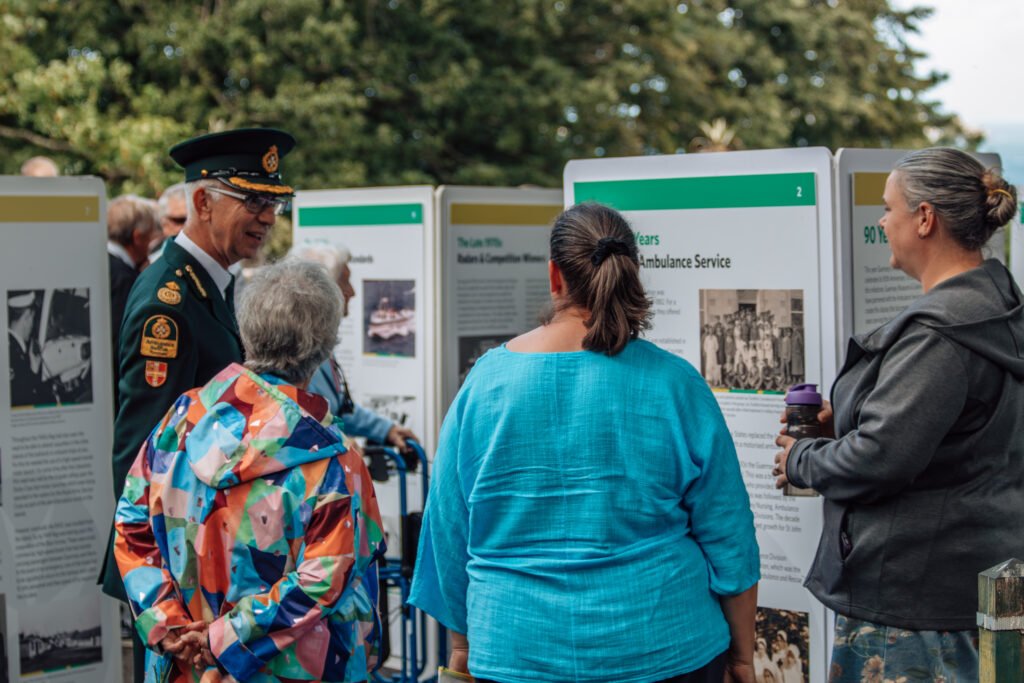
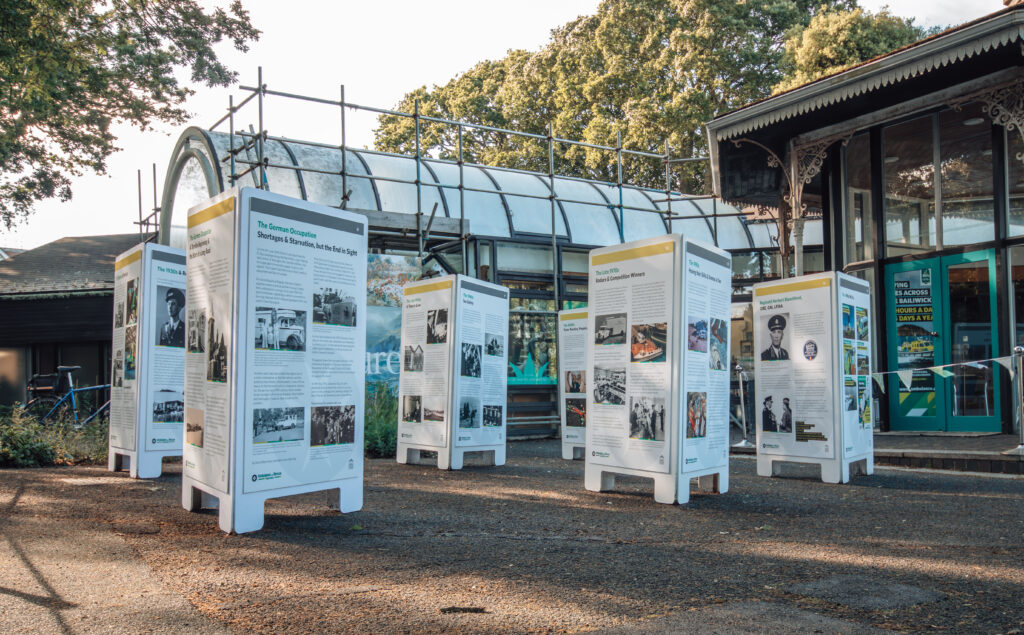
We are grateful to the Guernsey Museums Service for producing a series of tryptic information boards which, with the benefit of some wonderful photographs and accompanying narratives, tell our story pictorially throughout the last nine decades and I hope, if you have not already done so, you will spend some time enjoying and reflecting on the memories which are featured.
From our earliest days, under the visionary and pioneering leadership of our founder, Reg Blanchford, the Service has always strived to do the best it can for the community it serves. We may be a small service, but we can justifiably be exceptionally proud of our achievements.
Today, the St John Ambulance & Rescue Service is a modern ambulance service, employing skilled and competent Registered Paramedics who provide advanced pre-hospital care, with sustained performance and quality statistics that make us the envy of the NHS ambulance services on the UK mainland.
The exhibition at Candie Gardens, St Peter Port, is free and will remain in place till 6th September 2026.
“St John has been caring for communities and saving lives for over 900 years. Our longevity is due to our deep roots in the communities we serve and our ability to adapt to changing needs and contexts. From our largest Priories in some of the world’s biggest countries – Canada and Australia – to small and brilliant Associations in Malawi and the Solomon Islands, St John staff and volunteers train community members in life-saving first aid, work with young people to develop leadership and life skills as well as first aid, and provide vital emergency ambulance services. Being part of the St John global family connects our people to a vast community of skills, innovation and experience, and there is no better example of this than St John in Guernsey.
Your outstanding contribution to the life of the islands, the work of your dedicated ambulance staff and volunteers and your determination to get better, do more and save more lives represents the best of St John.
Your commitment to sharing what you’ve done and to communicating what we do and who we are is an example that you don’t have to be big to be great.
Congratulations on your 90th birthday.
Susan le Jeune d’Allegeershecque
Secretary General, St John International
Matt Harvey from Guernsey Museum said: “It was my pleasure to represent the Museum and serve as the curator on the creation of this display. But most importantly it has been wonderful to work with the people within the St John Ambulance & Rescue Service. People who are so obviously passionate about their organisation, the service that it provides to the island, its history and how far it has come over the last 9 decades.
My thanks go to out the Team at Ambulance & Rescue for pulling together historic and modern photographs as well as information from their archives. We combined this with material from the Museum’s own archive to create a display which I hope has done their story justice.
I would particularly like to thank Jim Cathcart, John Atkins, Dean De La Mare, Gary Blanchford, Joan Tostevin and Anne Blanchford for their support, resources, insights and patience.
Further thanks go to the Digital Designers James Gray and Richard Helpe and the Team at Dowding Signs.”
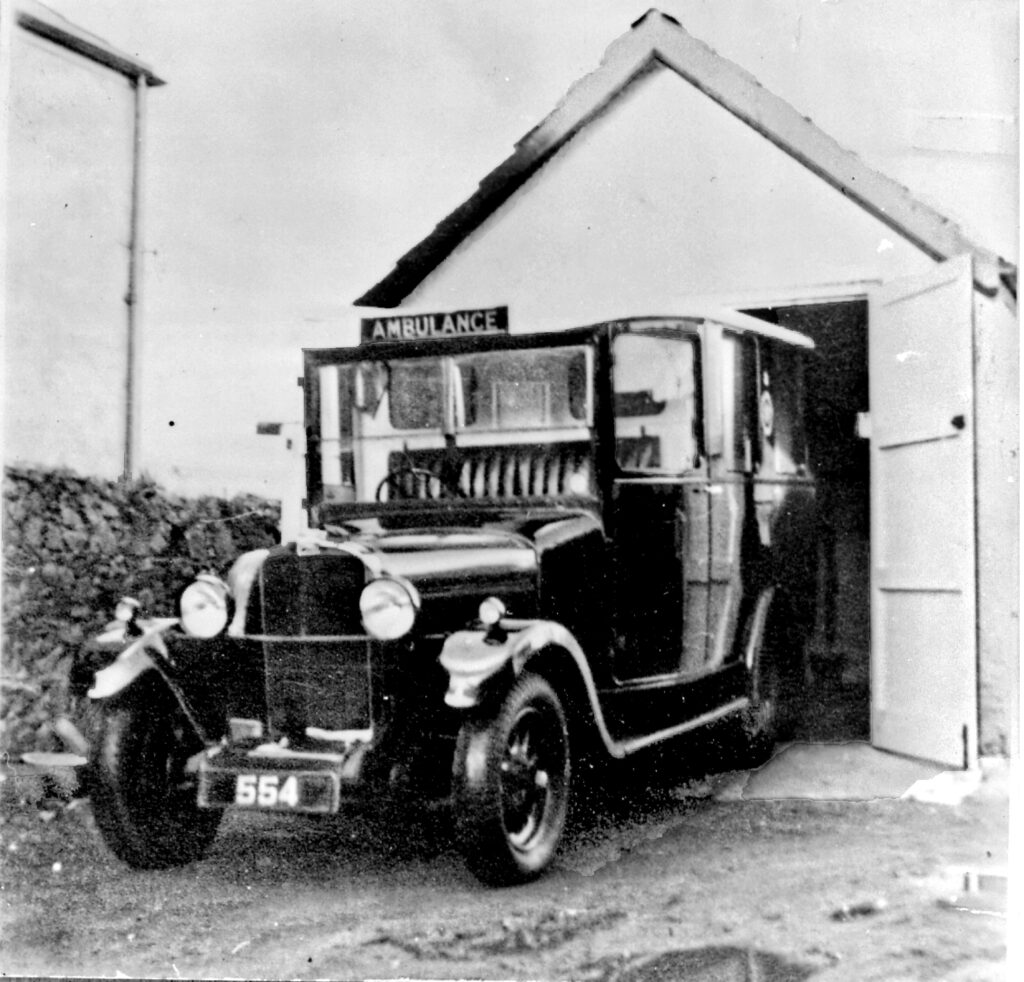
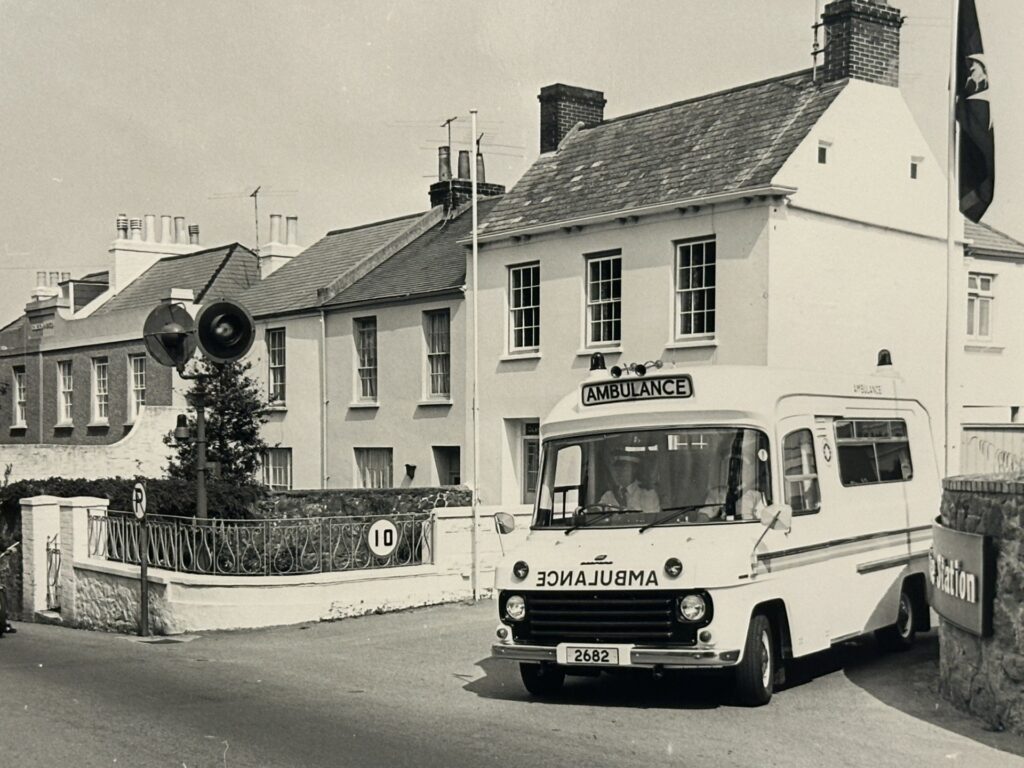
On 2nd June 1936, at 5pm, the first ambulance left the Rohais to respond to an emergency call marking the start of a new chapter in the island’s history.
It was the brainchild of Reg Blanchford who years earlier had suffered life-threatening injuries in a motorcycle crash and was left waiting on the roadside for the States-run part-time ambulance to take him to hospital. His wait was so long a passing motorist picked him up and took him to the doctor. While recovering Reg decided there was a need for a dedicated ambulance service with trained personnel.
After joining the St John Ambulance Brigade and much lobbying, Reg raised enough support and funding to by a second-hand ambulance, run by the newly formed Transport Division. It was funded through subscriptions and small grant from the States of Guernsey. He convinced his father to allow him to base it at the family concrete works on the Rohais. The ambulance service still operates from that site to this day.
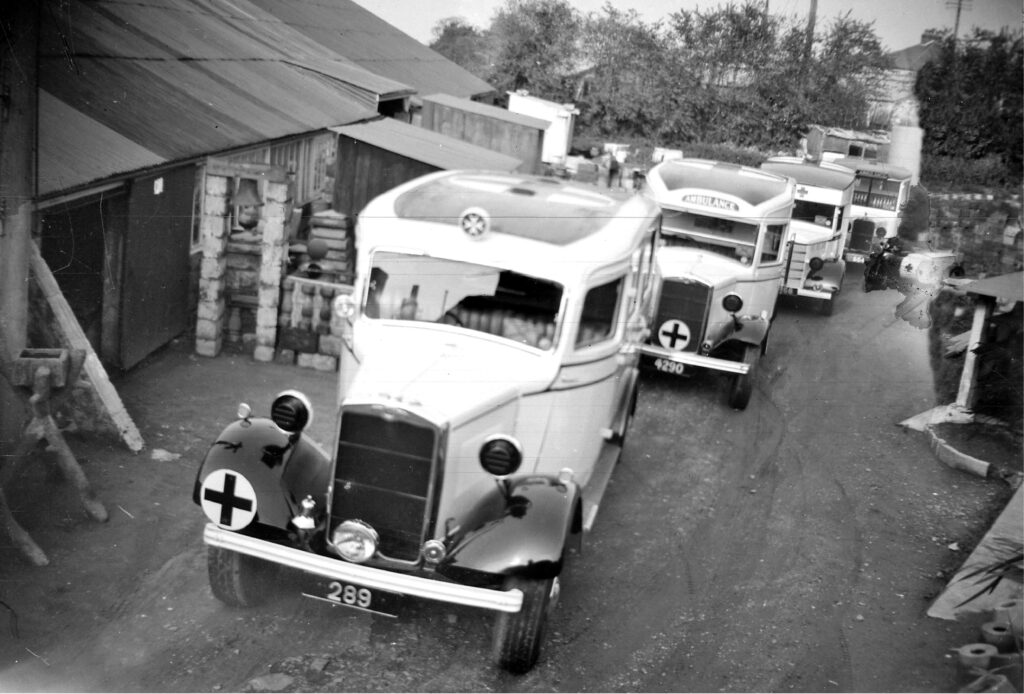
A few years later, in 1940, Guernsey was occupied by German forces. Despite the restrictions, St John continued to run the ambulance service throughout the Occupation, providing care for island who remained on the island.
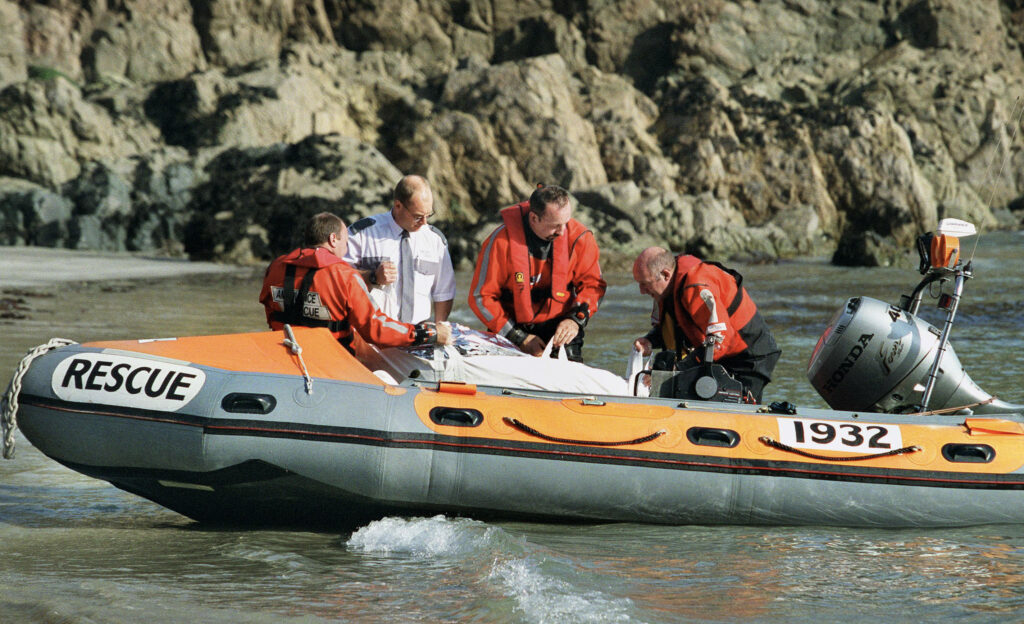
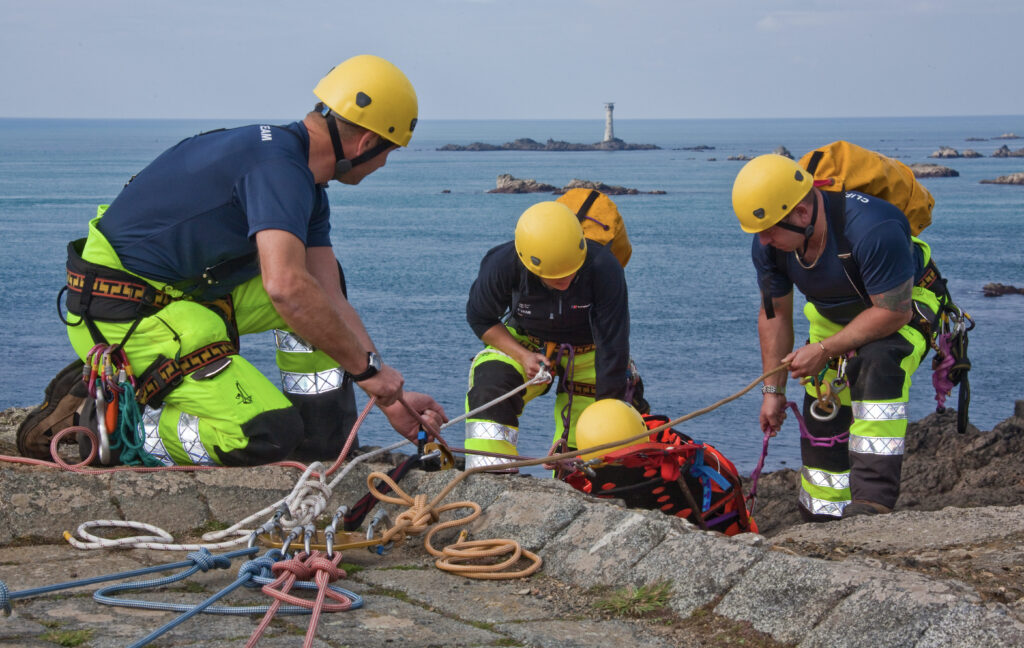
After the war the service grew with a number of pioneering developments during the 1950s and 60s, including the cliff rescue team, a diving team, inshore rescue boats, recompression chamber, and the world’s first marine ambulance Flying Christine. Ambulance crews not only treated sick and injured patients and conveying them to hospital, but also provided these essential rescue services. Staff were involved in countless daring rescues over the years, saving countless lives.
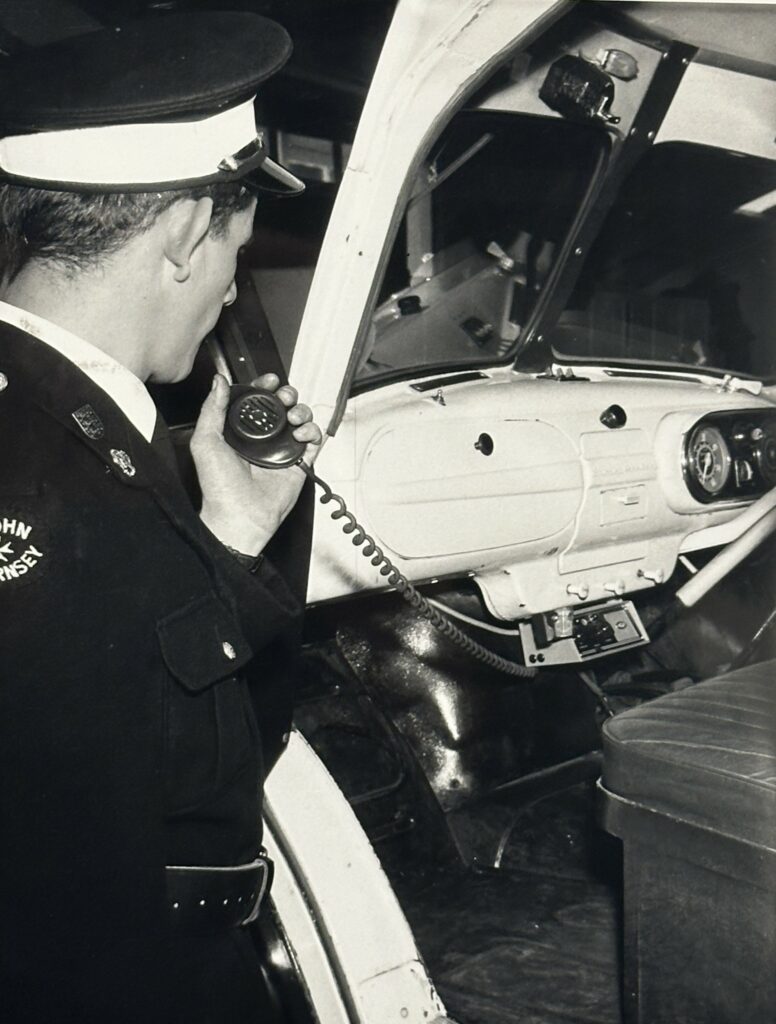
Guernsey was also the first place where mobile communications were installed in ambulances. It also had a dedicated mobile radar vehicle.
These pioneering years made the St John Ambulance & Rescue Service one of the most unique and advanced in the world.
In the early days the paid staff of the service were supported by volunteers from the St John Ambulance Brigade. That historic link between the professional service and the St John volunteers remains today, with SJARS and the St John Ambulance Guernsey charity sister organisations of the same St John group.
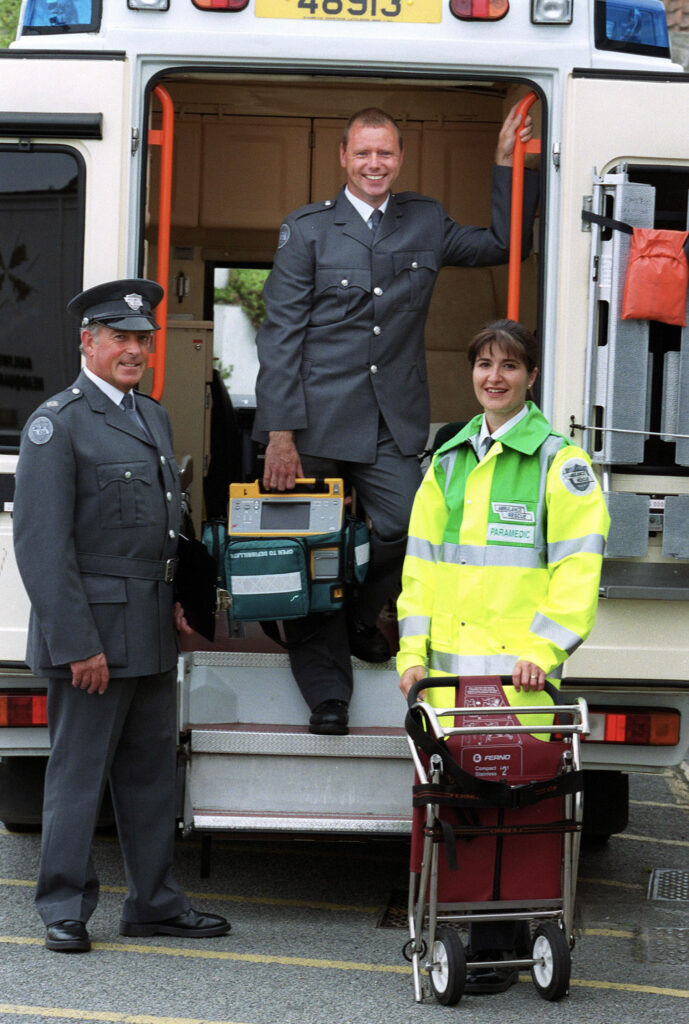
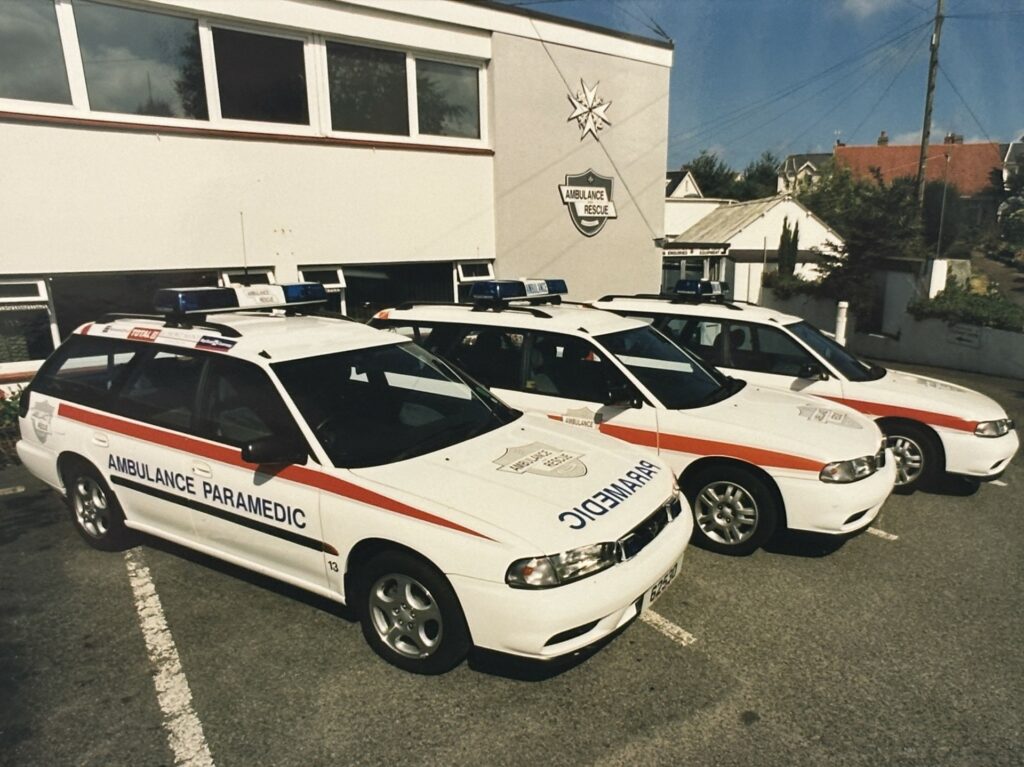
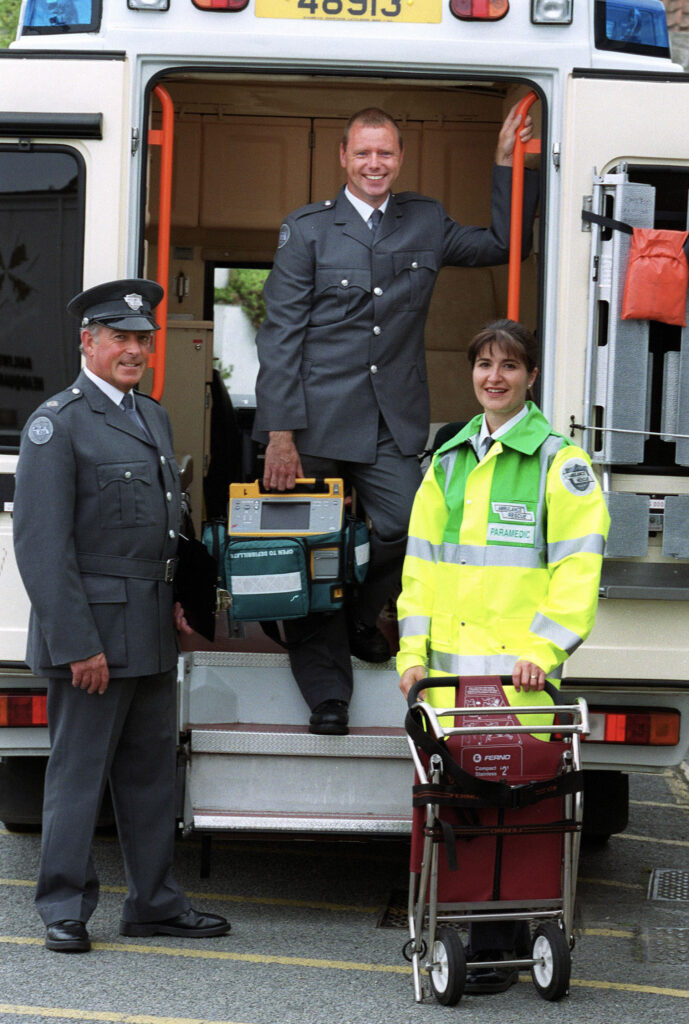
In recent times, the service has responded to the changing demands of the island community and while some of the original rescue elements are now the responsibility of other agencies, such as the RNLI and the fire service, SJARS is focused on providing excellent pre-hospital paramedic-led care to islanders. The first paramedic was introduced in 1992, with the first female paramedic appointed in 1998. Today SJARS employs around 60 staff, made up of paramedics, emergency medical technicians, emergency care assistants, ambulance care assistants and support staff.
St John provides the Ambulance Service on behalf of the States of Guernsey through a grant from the Committee for Health & Social Care.The grant is a contribution towards the operating costs of the service, with the remaining costs being met in a variety of ways including the subscription scheme and charges.
Today, SJARS responds to around 10,000 cases every year, made up of approximately 7,000 emergency and urgent calls and a further 3,000 non-emergency patient transfers. It operates a fleet of 5 front line emergency ambulances, 3 rapid response cars, two patient transfer vehicles, on off-road vehicle and the Flying Christine III marine ambulance.St John also provides the ambulance service in Alderney and supports the community first responders and ambulance volunteers in Herm and Sark.The uniforms, vehicles and equipment may have changed but the ethos of serving the community with care, compassion and excellence continues, reflecting the values of the St John organisation, in the service of humanity.
Volunteers from Guernsey’s marine ambulance are planning to drive a car from St Peter Port to Herm Island to raise vital funds for the Flying Christine III.
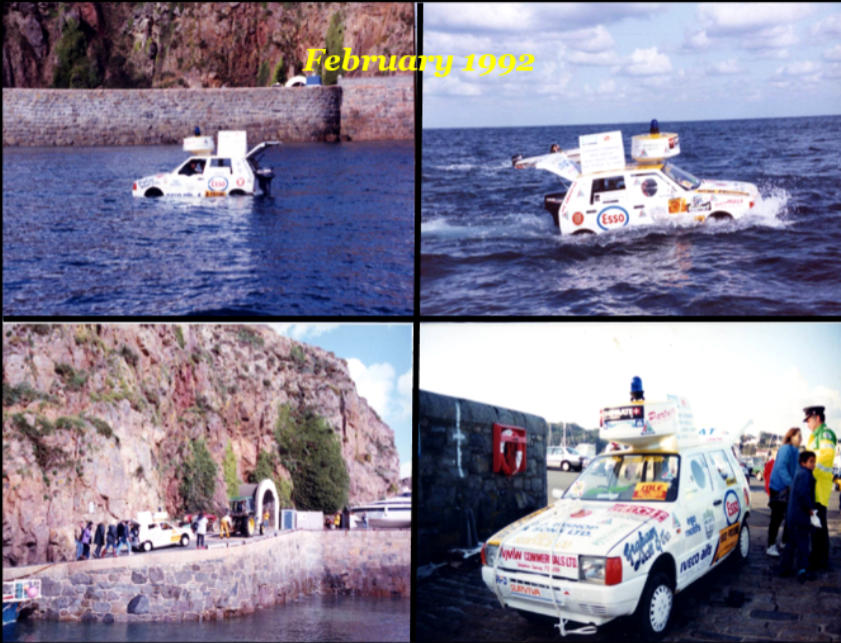
The event is a repeat of a similar challenge which took place in 1993 to help raise money for the building of the boat.
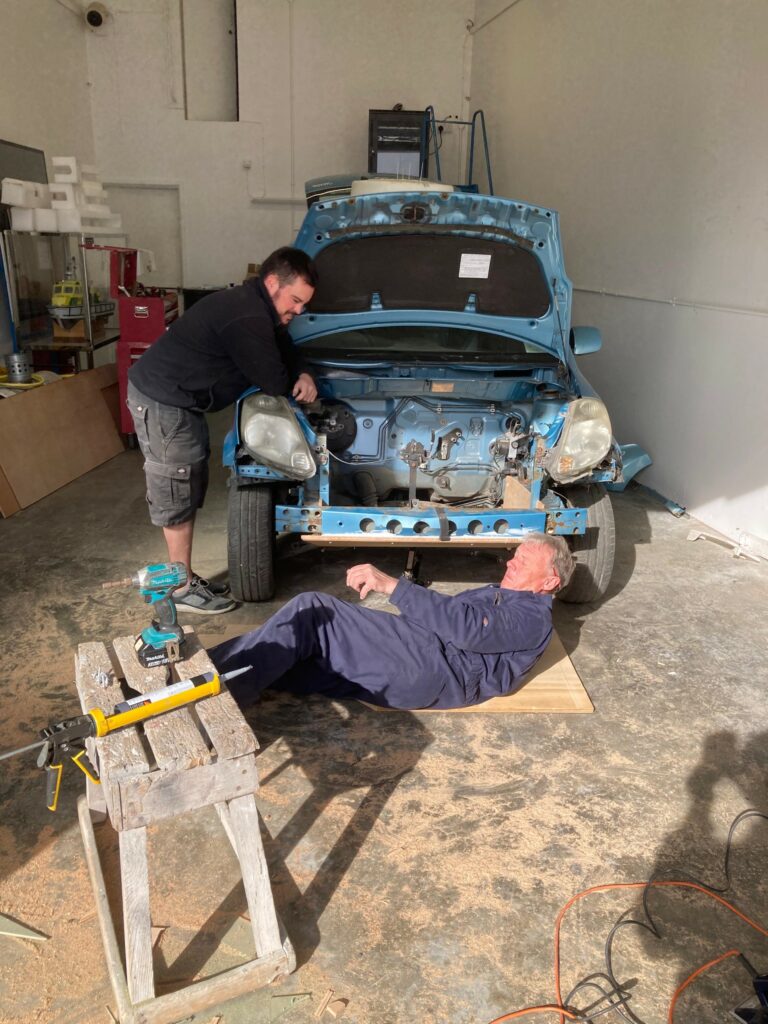
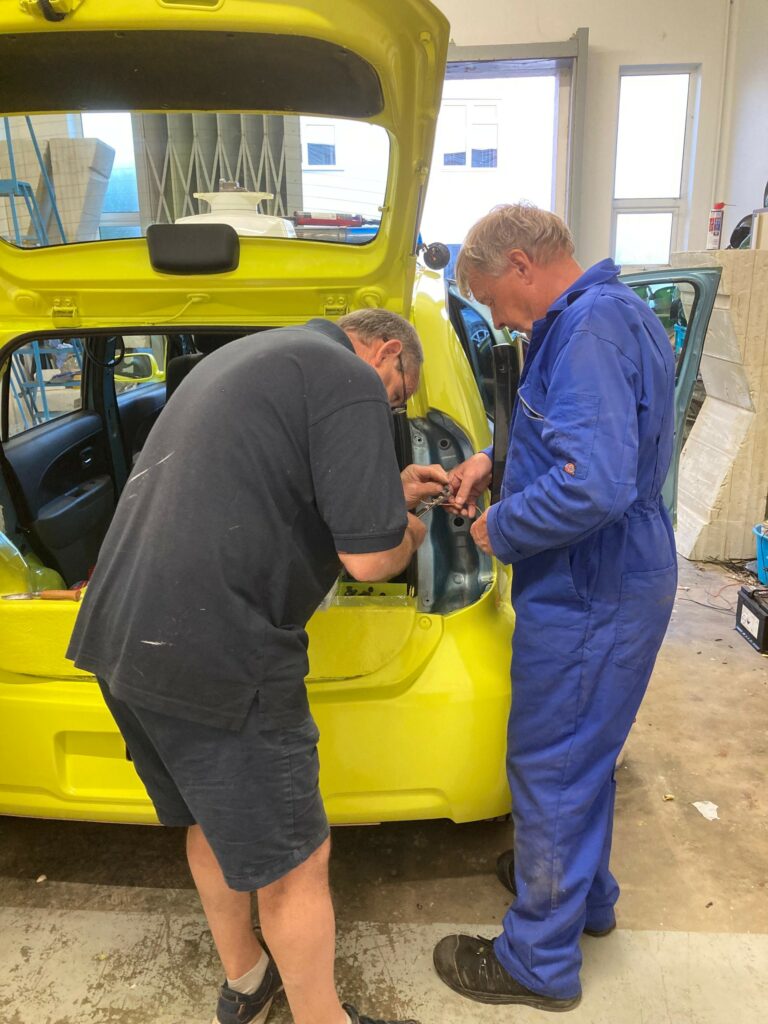
The team, who are all volunteer boat crew and experienced mariners, have been preparing the car to make it seaworthy and launched their fundraising initiative at the Seafront Sunday event on 17th May.
Gary Ward, Volunteer Operations Manager and former coxswain, who took part in the 1994 event, is leading the project. Gary said: “With the boat undergoing an essential mechanical overhaul, I decided it was a good opportunity to re-enact what Paul Phillips and myself did in 1993. We marinised a car then and sailed it from Guernsey to Sark raising several thousands of pounds. At the time, the new marine ambulance Flying Christine III was being built and funds were very short, so we wanted to do our bit and raise the profile.
“The crossing to Sark in 1993 was quite pleasant, it took just over two hours and the car stood up well. When we got to Sark, the Sark folk were extremely generous and they towed us around the island behind a tractor.
“We are now 33 years later, in a similar position where funds are much needed, not just for the renovation but for the longer-term financial future. We have almost completed the new car conversion and I’d like to thank all of the volunteers and everyone else who has helped us get this far”.
Paul Phillips, volunteer Flying Christine engineer, was also part of the previous challenge with Gary, his dog Cass and Buz White. Paul added: “I remember feeling a bit apprehensive when we sailed last time but once we launched, it was a great feeling. We thought replicating this challenge would be a great way to once again raise funds some 33 years later.”
The team is hoping to raise as much money as possible through donations and sponsorship. Anyone wishing to donate can do so online at ambulance.gg, by sending a cheque made payable to ‘St John Ambulance and Rescue Service’, or by using the QR code below
‘90 Years of Service’: Outdoor exhibition celebrates St John Ambulance & Rescue Service
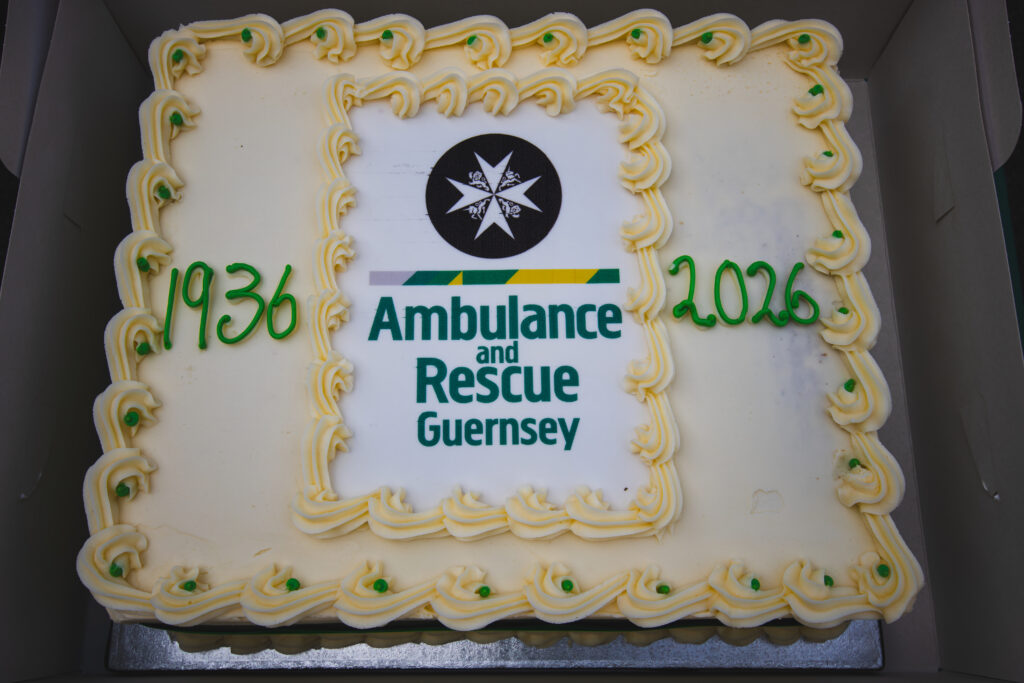
2026 marks the 90th Anniversary of the creation of the St John Ambulance & Rescue Service.
To commemorate this milestone, Guernsey Museums & Galleries has partnered with the Ambulance Service to create ‘90 Years of Service’, a free outdoor display telling the story of those nine decades.
Located on the terrace outside Guernsey Museum at Candie Gardens, the series of large outdoor display panels tell the story of the service in words and images. The exhibition opens on 2 June, marking the actual anniversary of the start of the ambulance service.
Historic photographs from the archives of both the Ambulance & Rescue Service and Guernsey Museums & Galleries have been combined with historical research to tell the story of the service and its role through the years.
Visitors will be able to trace the service’s journey from its humble origins starting with one second-hand ambulance housed in a garage at a concrete works, to the large, comprehensive organisation the island relies on today.
Matt. Harvey, Senior Curator at Guernsey Museums & Galleries, said:“Guernsey Museums is delighted to be able to create a display representing such an important and venerated island organisation. The St John Ambulance & Rescue Service has been a lifeline to islanders since 1936 on both land and sea.
Everyone knows the Ambulance & Rescue Service – they are part of the island landscape. But I hope that the display will give visitors a deeper appreciation of their amazing work and highlight the energy, dedication and initiative that their members have shown over the last 90 years. I hope people will discover the many examples of how the service has led the way in the development of innovative and ground-breaking advances in emergency response and first-aid care over the years.”
Dean de la Mare, Head of Operations at St John Ambulance & Rescue Service, said:“2nd June marks a significant date in the island’s history as the anniversary of the first ambulance leaving the Rohais station and responding to an emergency call. This exhibition tells the story of the pioneering work of Reg Blanchford through to the modern pre-hospital healthcare service that delivers paramedic-led care today. It has been a great joint project working with Guernsey Museums and our team of contributors, and I am very excited to see the exhibition open to the public.”
The Commandery of St John in the Bailiwick of Guernsey is pleased to announce the appointment of Heather Langlois as the Group Chief Executive Officer for St John Ambulance and Rescue Service and St John Guernsey charity.
Heather has spent the last four years as Chief Executive Officer of the St John Guernsey charity, a role responsible for the development and execution of short- and long-term strategy, financial sustainability, and overall management of operational service lines.
Heather will now take overall responsibility for leading the executive teams, long-term strategy and external affairs for both the ambulance service and the charity.
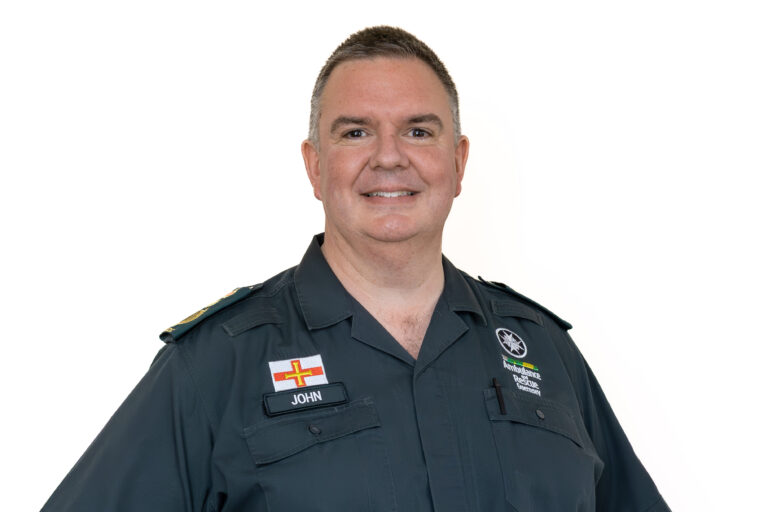
Heather will be supported by John Atkins who takes on the role of Chief Ambulance Officer and will be responsible for the delivery of the emergency ambulance service, marine ambulance and patient transfer service.
Previously, John was Head of Resilience and Education a role in which he was responsible for the Service’s emergency preparedness, resilience and response arrangements, as well as overseeing training and education.
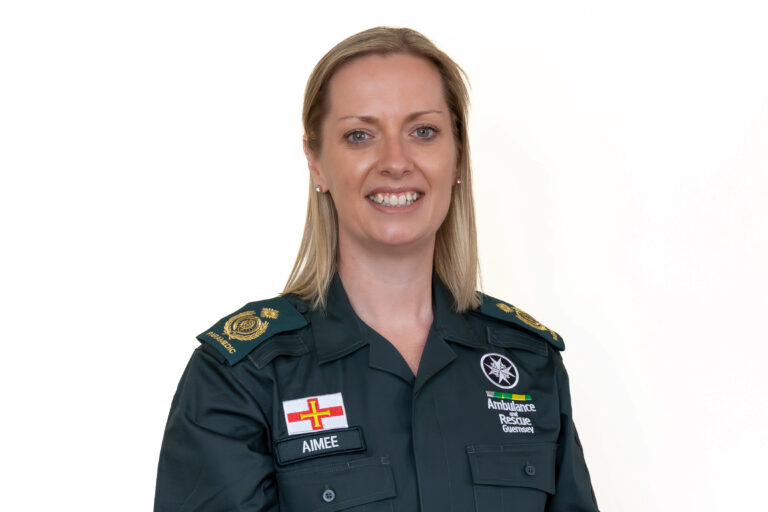
Aimee Lihou has been appointed as Chief Operating Officer, overseeing daily business functions.
The appointments follow the resignation of Mark Mapp, who announced in December last year his plans to stand down from the role of Chief Executive Officer of the ambulance service, after seven years leading the organisation.
Marc Farror, Knight Commander for Guernsey said: “I am delighted that Heather has taken on the role of Group Chief Executive Officer. Having responsibility for both parts of the St John organisation in Guernsey creates a more effective and strategic structure. Redefining the senior roles allows us to consolidate functions and ensures we continue to deliver the professional standards our community has come to expect as part of a sustainable model of care, which ultimately means the best care for our patients. As a charity it is vital that we continually look to our efficiencies and ensure we get best value for money. Heather will be supported in her role by John Atkins who will take on the statutory responsibilities of Chief Ambulance Officer, and by Aimee Lihou who becomes Chief Operating Officer. We are extremely fortunate to have such great people leading the organisation. I would like to take this opportunity to thank Mark Mapp for his leadership, positivity and strategic vision over the past seven years”.
New Group Chief Executive Officer, Heather Langlois said: “I am privileged to take on this role at such an important time for St John in Guernsey. Bringing the two parts of the organisation together is an opportunity to sharpen our strategic focus and align our priorities. I am delighted to be working with John and Aimee who have vast experience in previous roles within the ambulance service.
John Atkins said: “It is an honour to be appointed as Chief Ambulance Officer at a time of renewed leadership in the organisation and as we prepare to celebrate 90 years of serving the islands. I’m looking forward to working alongside Heather as our new Group CEO to ensure we continue to develop our role as a vital pre-hospital healthcare provider in the islands, as part of a future sustainable model of care”.
St John Ambulance and Rescue Service (SJARS) provides the statutory urgent and emergency ambulance service for Guernsey and Alderney on behalf of the island’s respective governments, as well as the non-emergency patient transfer service, the marine ambulance service and a major incident response for the islands.
SJARS is part of the wider St John organisation in Guernsey which also consists of the St John Guernsey charity, which provides volunteer first aid cover, youth work and first aid training.
A group of paramedics from the island’s ambulance service and an Emergency Department consultant will be running the Guernsey marathon on Sunday to raise funds for Bowel Cancer Guernsey.
The team, calling themselves ‘Five Vital Signs’, comprising of paramedics Ross Senior, Steve Domaille, Dom Fletcher, Andy Adam and Dr Mat Dorrian, is taking part in the marathon relay, made up of legs from 4 miles to 6.5 miles, around the 26.2 mile course.
Bowel Cancer Guernsey was chosen as it has special significance because one of their colleagues has personally benefited from the charity’s support. As well as raising vital sponsorship this joint initiative will also help raise awareness of bowel cancer, the symptoms and treatment. The event also highlights the strong collaboration between staff from the ambulance service and the Emergency Department, not only in their daily professional roles but also within the wider community.
Ross Senior said: “Taking part in the Guernsey Marathon as a joint ambulance and Emergency Department team is a great way to demonstrate the close partnership we share in caring for our community. Supporting Bowel Cancer Guernsey is particularly meaningful to us, as we’ve seen first-hand the difference the charity makes to patients and their families. We’re proud to run together for such an important cause.”
Dr Mat Dorian said: “Bowel cancer is the third most common cancer in Guernsey, but the good news is if it can be diagnosed in the early stages it can be successfully treated. Bowel Cancer Guernsey has done a great job in raising this awareness and we are pleased to be able to support them to do more in the Bailiwick.”
The team are using the name ‘Five Vital Signs’ to raise awareness of the main symptoms of bowel cancer.
Dr Dorian added: “The symptoms can include a change in bowel habits, which might be loose stools, diarrhoea or constipation; rectal bleeding; unexplained weight loss; extreme unexplained tiredness; persistent abdominal pain or a lump. The symptoms can also be similar to a number of other conditions, so it is important to get yourself checked.”
To support the team and make a donation to Bowel Cancer Guernsey click on SportsGiving - Team: Five Vital Signs or search for SportsGiving Five Vital Signs.
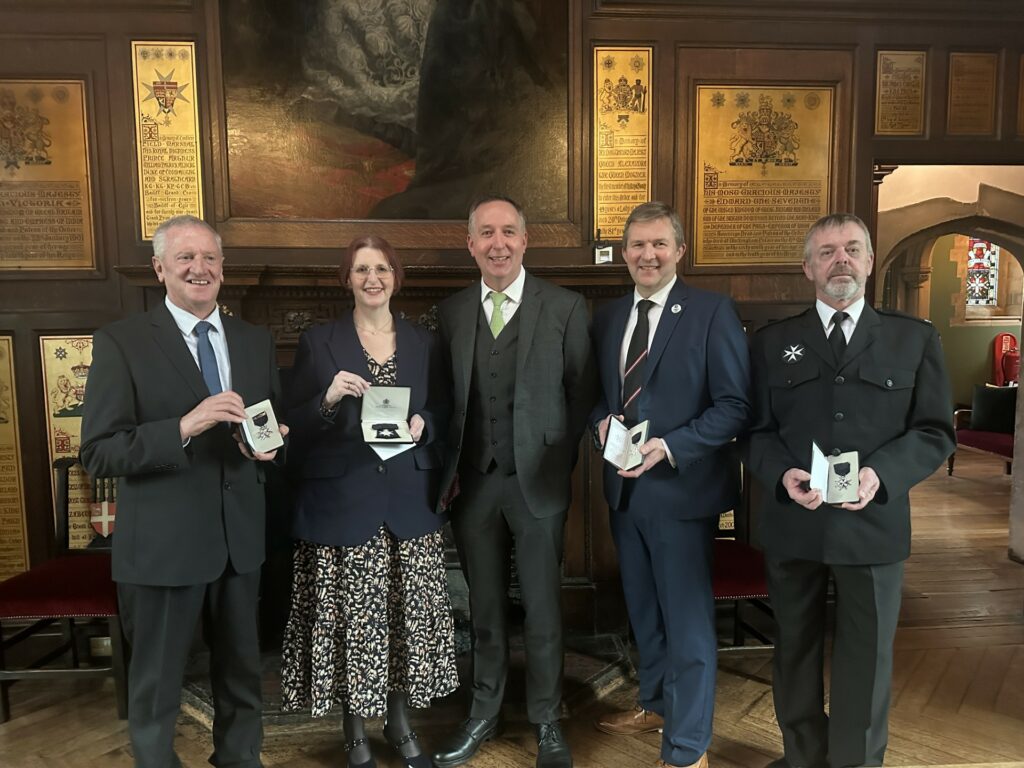
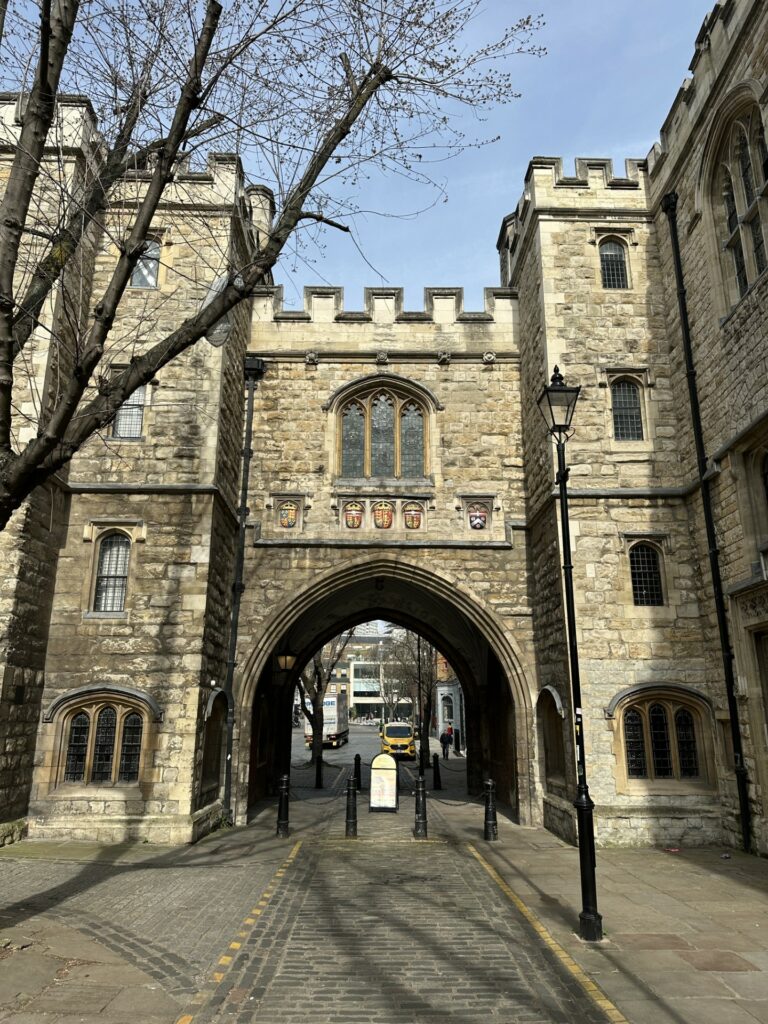
Four people from Guernsey have been invested into the prestigious International Order of St John at a ceremony at St John’s Gate in London.
Nicola Hoyland Birch, Lieutenant of the Commanadery board, was formally appointed as an Officer of the Most Venerable Order of St John of Jerusalem for services to the Ambulance and Rescue Service and the St John group in Guernsey.
Long serving Flying Christine volunteer Andy Lowe, who has been an active member of the crew for more than 30 years was invested as a Member of the Order of St John for services to the marine ambulance.
Volunteer Alan Stevens was appointed a Member of the Order for his dedicated service spanning more than 40 years, specifically for his contribution to the Volunteer Ambulance Reserve and event first aid with the St John Guernsey charity.
Paramedic and Communications Officer Jim Cathcart was recognised for his services to the St John Ambulance and Rescue Service and the wider St John organisation and was invested as a Member of the Order.
The ceremony was conducted by the Prior of St John in England and the Islands, Rear Admiral Simon Williams.
Nicola Hoyland-Birch said: “I am honoured to be recognised as an Officer of the Order of St John. The investiture was a deeply personal moment filled with both pride and gratitude. To have the contribution I make to St John recognised in this way feels truly special.”
Andy Lowe added: “It was a wonderful day and an honour to be involved in a very special occasion. It was also very interesting to learn more about the history and heritage of St John, some of which was reflected in the ceremony. It’s a real privilege to be involved with the boat, especially as my uncle, John Osbourne was the boatbuilder of Flying Christine II. There have been so many times when I have seen first hand how the marine ambulance has made a difference, from maternity cases to some very sick patients, it is a lifesaving service.”
Alan Stevens said: “I first joined as a Cadet at the age of 12 and from those early years, till present day, I have always felt that it was a calling, whether that be treating in first aid or in the ceremonial roles. It’s given me confidence within myself, through the duties I have undertaken. The award is a great honour. For me, St John is what one can put into the organisation and hopefully I’ve always put everything in to all that I do.”
Jim Cathcart commented: “It was a huge honour to be invested as a Member of the Order. The ceremony, which took place in the historic surroundings of the Priory Church and the Chapter Hall of St John’s Gate, was a unique experience and it was very humbling to be surrounded by so many people who have gone above and beyond in their service with St John. It struck me that there are many small parts of this large international organisation all doing great things and collectively all those individuals make a huge impact improving the lives of others.”
The appointments were announced in The Gazette in October 2025. Appointments and promotions in the Order of St John are sanctioned by His Majesty King Charles III, the Sovereign Head of the Order. The Order has its origins in Jerusalem around 1070, when the Hospitallers cared for poor and sick pilgrims of all faiths. The Order of St John re-emerged in England during the Industrial Revolution, in the reign of QueenVictoria, who made it a Royal Order of Chivalry. Today the Order of St John is an international organisation which continuesto deliver first aid, ambulance services and healthcare in more than forty countries.
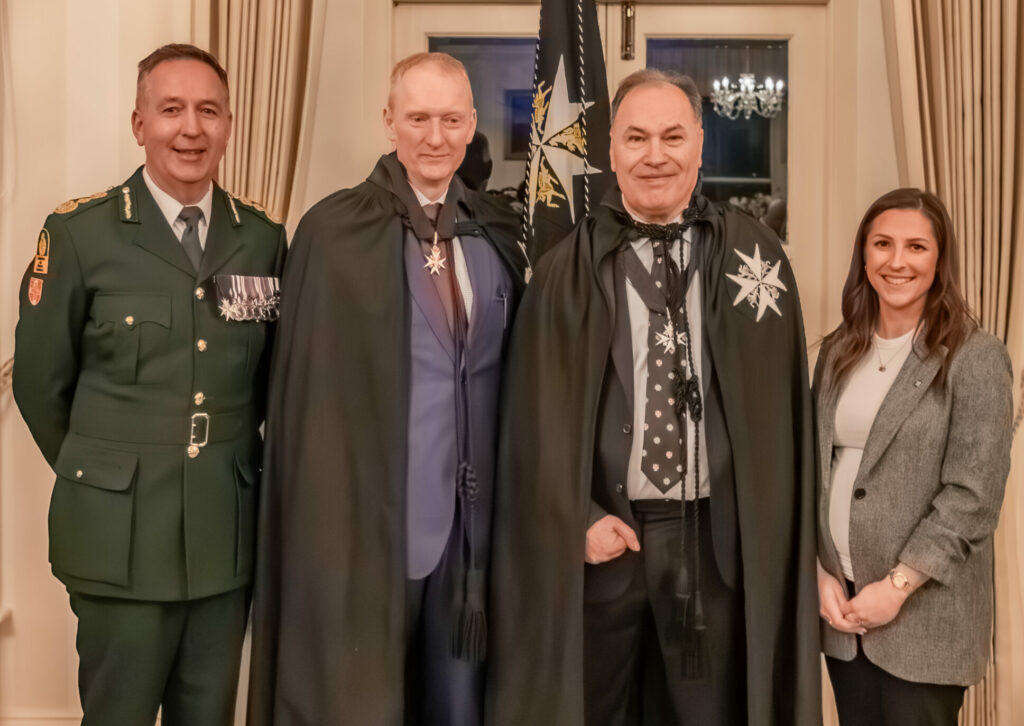
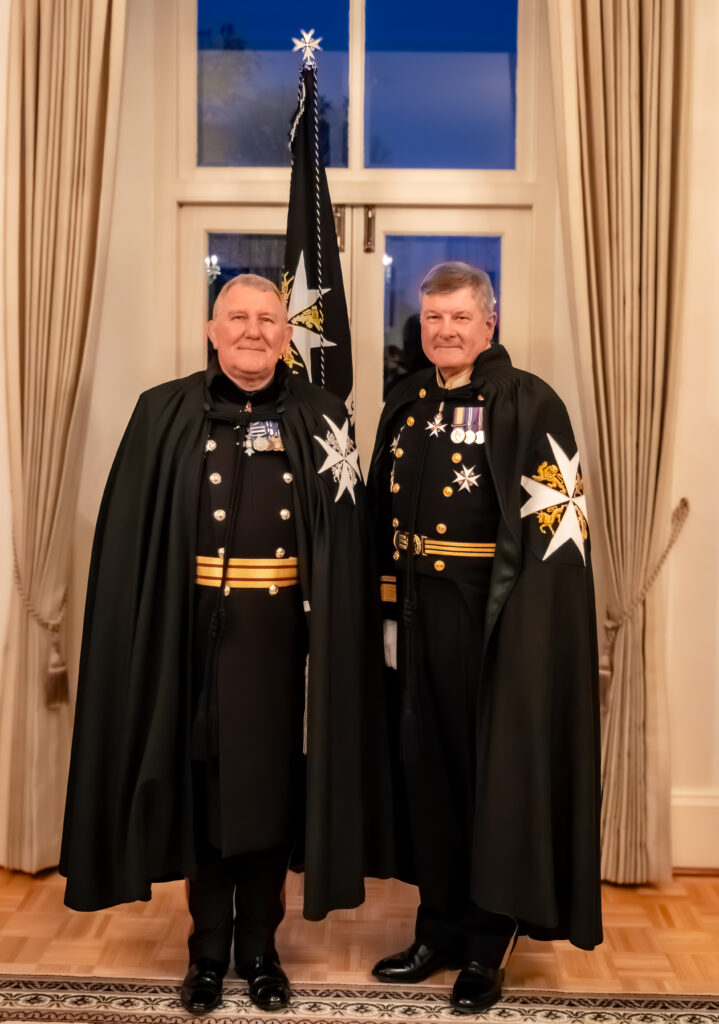
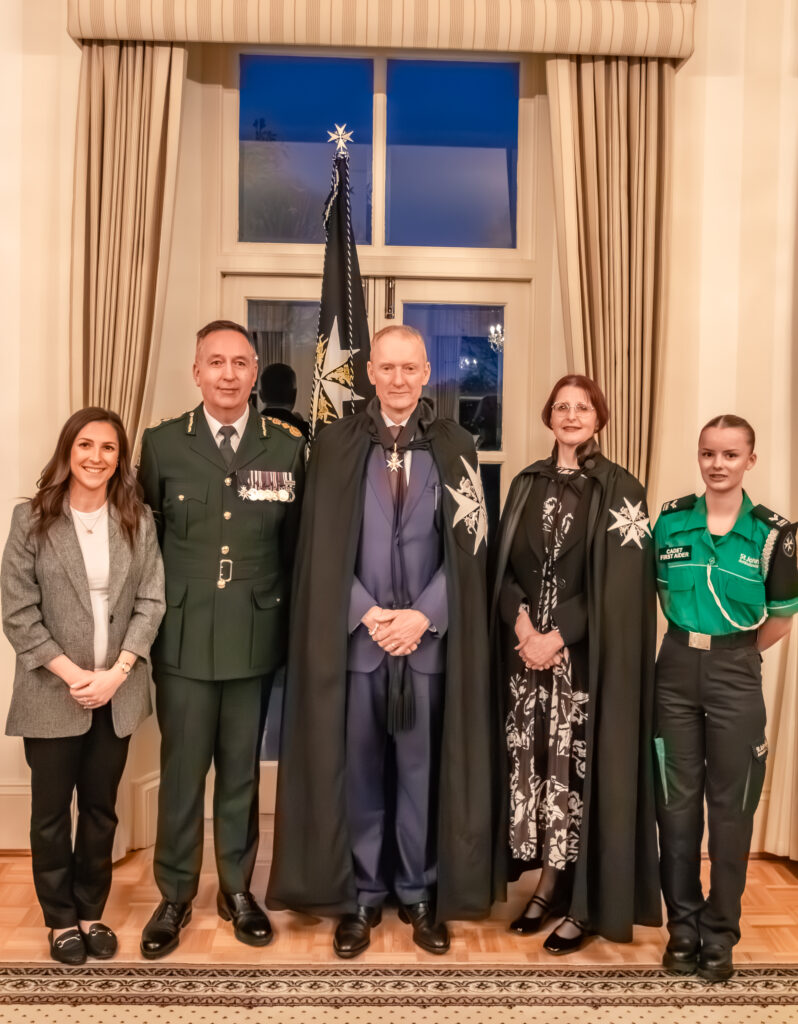
A special investiture ceremony, normally only held at the headquarters of St John in London, has taken place in Guernsey to invest two Knight Commanders of the International Order of St John.
Chief Ambulance Officer Mark Mapp, Marc Farror, John Hollis and St John Guernsey CEO Heather Langlois
The event at Government House saw John Hollis and Marc Farror formally promoted to the rank of Knight Commander of the Order, both promotions having been sanctioned by His Royal Highness King Charles III.
Mr Hollis previously held the role of Knight Commander of St John in the Bailiwick of Guernsey but had to step down due to ill health before his ceremonial appointment was able to take place. Mr Hollis was succeeded by Marc Farror who took up the role in January 2025. During the ceremony, which was conducted by Prior of England and the Islands, Simon Williams and His Excellency the Lieutenant-Governor Sir Richard Cripwell, a ‘transfer of power’ signified the transition of leadership to Marc Farror.
His Excellency the Lieutenant-Governor Sir Richard Cripwell and Prior of England and the Islands, Simon Williams
Marc Farror said: “I am thrilled to be invested as Knight Commander alongside my good friend John Hollis. John, in his short time as the Knight Commander of St John in the Bailiwick of Guernsey, made such a positive impact on our organisation, and as the new Knight Commander, I realise that I have a lot to accomplish to fill his shoes.
He added: “It is an honour to be recognised as part of the Order of St John, as it is a 900 year old order of chivalry, that has its origins in pilgrims making their pilgrimage to the Holy Land and seeking aid and refuge from the Hospital of St John of Jerusalem.
“I’d like to thank the wider team in St John, our staff, volunteers, and our community, who give us tremendous support. They are the heroes who give their time who deserve this accolade. I feel privileged to serve in such a team.”